








|
|
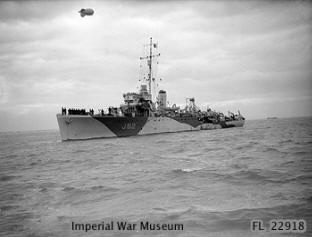
HMS Hussar (IWM FL22918)
|
Date of Arrival |
Place |
Date of Departure |
Orders, Remarks etc |
|
13.1.42 |
The Navy List indicates
that Lt. R C Biggs, DSC, appointed on 13 Jan.1942, became Commanding
Officer (until March 1943) |
|
|
Source:
Private papers of Lt R M Milligan RCNVR - IWM 500 88/55/1
... a signal came through posting me to HMS Hussar as watch officer.
She was then supposed to be in Scapa so off I went, a cold all night
train trip, only to find that the Hussar was not there but at West
Hartlepool. I was sent out to spend New Years Eve on a battleship
censoring, or helping to, ratings letters. Then back again south to
find my ship. Not to worry, quite normal, change at York for West
Hartlepool, if its not being bombed.
I find the Hussar in dry dock with a lot of work still to be done on
her. Meet her Captain, Lieutenant Commander Biggs DSC RN, ex Gunnery
Officer on the Exeter at the Battle of the River Plate, action where
he earned his medal. This is first command. A smallish cheerful man
of about 40, good company ashore, and me being Canadian and
presumably not knowing any better, seemed to make it easier for an
RN to waive normal formality. Our other officers were Lt Morrison,
RNR No.1, Lt Collinson, RNVR, Electrical or Green Striper, Sub.
Hargraves, RNVR Gunnery, Sub Lt Hogg, RNVR Navigation (a Rhodesian),
Lt T T Green, Watch Officer like me, Chiefy whose name for the
moment I forget, and CPO Swift, Coxswain. We made up 120 in all, a
wartime complement.
With the refit finished we had a four inch forward, multiple point
fives on either side below the bridge and twin Oerlikons on either
side aft above the Wardroom, abaft of which was the sweeping gear.
It was bitterly cold with over a foot of snow on the ground, one of
the coldest winters they had had - this was top secret naturally.
We lived ashore until she came out of dry dock. The Hussar was a
Halcyon Class Fleet Sweeper, presumably to do an Oropesa Sweep at
speed ahead of the Fleet, maybe at 12 knots, doubt me that they ever
did. Peacetime built they had rather better accommodation than
normal for a warship. With the crew almost doubled they were rather
crowded below. Nevertheless I rated a cabin to myself, small though
it was. It had a porthole, never opened, a single raised bunk and an
electric heater. The Wardroom was commodious stretching right across
the ship. It actually had a small organ which had been scrounged
from somewhere at an earlier date. We had a full time guest there
whilst we were in dry dock. He sat throughout the day in a chair
looking upward. Seems that they had bored a hole through while
putting in the Oerlikons and told him to watch it, which he did all
day until sometime later they came and put a bolt in it. To go on,
the Halcyon sweepers in size were about half way between a Corvette
and a small Destroyer, looking more like the latter which,
fortunately, they were by the enemy. By the time I joined Hussar
they were all being used as Convoy Escorts and several had already
been lost, mainly on the Russian run.
My recollection of what went on while we were in West Hartlepool is
very sketchy being absorbed in trying to learn, take in everything
that was going on, just what I was supposed to do about it
especially as I was supposed to know a lot more than I did.
|
|
? |
Hartlepool |
8.2.42 |
21/1 From NO i/c
Hartlepool: Completes midnight 5/2, subject to satisfactory trials
intend to sail a.m. 8/2 |
|
9.2.42 |
Methil |
9.2.42 |
|
|
|
Source:
Private papers of Lt R M Milligan RCNVR - IWM 500 88/55/1
In due course we went about our business and sailed for Scapa to
join a convoy going to Murmansk. We had a spot of bother when
we arrived there and were signalled to anchor. The skipper, true to
Big Ship fashion dropped his portside anchor while moving slowly
ahead streaming out anchor chain, then dropping back with the wind
or tide so as to lay to the chain rather than the anchor. EXCEPT it
did not allow for out shallow draft and now excessive top hamper,
especially forward. So she quickly swung beam to starboard and
drifted down the sound, picking up the anchor and with it several
old and new large cables that were stretched across the bottom, all
of which came up with us. Pulling the anchor up onto the bow and
cutting it free of cables was a painful sight as we seemingly
hastened towards the end of the Sound.
The skipper was about to lose his first ship, even went down to help
with the hacking and hewing. At nearly the last moment she came free
but it was too late to turn head on so we went full speed stern
first, with the seas breaking over the bridge the wrong way, until
we found a more sheltered spot and dropped anchor in the normal
small ship manner. I was on anchor watch that night constantly
taking bearings and fancying that we had or were dragging again.
|
|
10.2.42 |
Scapa |
12.2.42 |
|
|
? |
Scapa |
14.2.42 |
|
|
|
Source:
Private papers of Lt R M Milligan RCNVR - IWM 500 88/55/1
We set sail the next day and joined the convoy. It was uneventful
except for the weather which was as usual, damnably wet, cold,
foggy, freezing up everything, high seas and so on. Being new, at
first we were two to a watch with four on and four off. Later by
using Collie the Green Striper we were able to make it four on eight
off more or less. But that caught up with us and he was not really
allowed to stand a watch, nor was Hogg the Navigator.
We had been issued with fleece lined canvas greatcoats weighing a
ton, and fur lined hats, high sold leather boots that were as cold
as charity sea stockings or not. We had radar that worked off and on
and helped to keep station with the convoy ships, especially when
zigzagging. In really heavy weather I found wedged between the
compass and the asdic cabinet was a good holding place with the seas
hitting the canvas dodger and going over my head. Was a wide open
bridge of course. Outside of that it was an uneventful trip. We came
into the estuary of Murmansk, let the Merchant go on up and later
anchored further down ourselves.
|
|
14.2.42 |
At sea |
|
Between 14 and 23 Feb 1942
HUSSAR was with Convoy PQ11 (13 ships). Initially this convoy
was protected by NIGER (S.O. Escorts), HUSSAR and MIDDLETON, AIREDALE
('Hunt' Class destroyers), SWEETBRIAR (corvette) and BLACKFLY, CAPE
ARGONA and CAPE MARIATO (trawlers). From 17 to 21 Feb the escort was
NIGER, HUSSAR,
SWEETBRIAR and OXLIP. The cruiser NIGERIA joined for the 21/22 Feb.
with two Russian destroyers and Harrier, Hazard and Salamander. Rain,
fog and snow had shrouded the ships, and the convoy, steaming at about
eight knots, avoided the enemy, arriving Murmansk 22/2 without
incident.
|
|
|
Source:
Private papers of Lt R M Milligan RCNVR - IWM 500 88/55/1
I do not remember the names of the cruisers and destroyers but we
were four, the Harrier, Niger, Gossamer and ourselves. At first we
used to go up to Murmansk. I remember our first trip ashore there.
Many of us had started to grow beards and were in the most scruffy
looking stage. What with that and our unseemly looking canvas coats
and hats, the Russian sentries were, I think, aghast. Contrary to
expectations the Russians were clean shaven. There was, we were
told, a tax on beards.
Murmansk itself had numerous large cement buildings but it was
noticeable that they were not completed. A number of stores but
nothing to buy in them. There was a strong urine like smell
throughout. People were dressed mainly in down filled (sea gull
feathers) clothes. There were a number of people lined up with their
bowl at feeding stations.
On the outskirts of town was a military camp, numbers of very large
log houses or buildings. It was on the hill below this that Collie
and I found a number of soldiers skiing having a fine time bouncing
over bumps and tossed in the air. A cheery lot with whom we dickered
for their skis, 'bolshie lugie' it sounded like. I got a pair with a
Hagen harness on it for three (3 X 20) packs of cigarettes and a bar
of nutty (chocolate). A satisfactory trade both ways I gather. We
skied several times together but not allowed on that hill and only
tried once more near there. We had found a small hill and were going
up and down it when we noticed a powerful looking Russian woman
standing at the bottom with a rifle which she had pointed at us as
we came down. We politely left and went back to our ship. |
|
10.3.42 |
|
|
HMS HARRIER (SO M/F 6),
HMS SPEEDWELL, HMS HUSSAR, HMS SHARPSHOOTER sail pm 10th
March to rendezvous convoy PQ12 during daylight 11th March.
|
|
11.3.42 |
At sea |
12.3.42 |
Harrier, HUSSAR and
Speedwell joined PQ12 (17 ships) as eastern local escort
arriving Murmansk 12/3. Although Tirpitz searched for the convoy,
PQ12 arrived unmolested. |
|
? |
Murmansk |
|
16/3 From SBNO North
Russia: During air raid on Murmansk night 15th/16th,
12 bombs dropped in dock area. HUSSAR was near missed twice. No damage
or casualties to HM Ships or merchant vessels |
|
|
Source:
Private papers of Lt R M Milligan RCNVR - IWM 500 88/55/1
Murmansk was
the end of a single line going south to Moscow etc. We were up there
one night with the Gossamer, our chummy ship. She was alongside the
jetty and we alongside her. Come evening the troops were all aboard,
when the Jerrys decided to make a raid. We were not allowed to man
our guns so just stayed put with our game of darts. It was a bit
noisy outside. Anyway a string of bombs spread-eagled us, one going
into the jetty making a bit of a mess of Gossamer's rigging. The
next nicely passed us and the other two went through the ice as we
found next morning.From then on, stops in Murmansk were out and we
anchored down stream ten miles or so and not too close together.
|
|
21.3.42 |
At sea |
|
Gossamer, HUSSAR,
Harrier, Niger and Speedwell provided Eastern local escort for QP9
until 23/3 . Ocean escort included Britomart and Sharpshooter.
|
|
|
Source:
Private papers of Lt R M Milligan RCNVR - IWM 500 88/55/1
Our job was to be part of an escort going out with a convoy for four
or five days, meeting the incoming one and helping bringing it in.
Weather was the main problem at first and there was little daylight.
Ice and heavy seas kept the U Boats away, not conducive to their
operation. As the days grew longer so did the air attacks. There
were a number of hits but |I do not remember losing any at our end.
In the meantime the Jerrys blasted Murmansk and flattened a lot of
it. One could not envy the merchant ships going up there to unload.
|
|
28.3.42 |
PQ13 endured the full Arctic repertory of foul weather, and
attacks by enemy ships, submarines and aircraft... The Eastern Local
Escort consisting of the minesweepers Gossamer, Harrier, HUSSAR,
Speedwell had left Kola on 28th March to bring the convoy in and look
for survivors and stragglers.
That
evening Trinidad had to stop with salt in the boiler feed water. The
wind died, a full moon and a brilliant aurora lit up Trinidad as a
perfect target. She was only 70 miles from the Kola Inlet. She managed
to get going again and arrived at Kola on 30/3.
|
|
28.3.42 |
Source: ADM 199/347- Report of the Local Escort
From The Senior Officer, Sixth Minesweeping Flotilla
Date 9th April 1942 No.
F.02/26
To The Commander in Chief, Home Fleet
Convoy PQ13
The following narrative of local escort while meeting
PQ13 is submitted. All times are zone minus three:-
1. Before leaving harbour, it was known that Convoy
PQ13 was widely scattered owing to gales and that S.S. "HARPALION" had
been bombed.
2. H.M.Ships "HARRIER", "GOSSAMER", "SPEEDWELL" and
"HUSSAR" sailed at 1900 through position MU to 37ºE, carrying out an
A/S patrol en route.
3. At 2118 H.M.S."HUSSAR", who was keeping guard on
500 k/cs, reported that the S.S."EMPIRE RANGER" was sinking in
position 72º 13'N 32º 10ºE. As "EMPIRE RANGER" was apparently just
ahead of the convoy and, apart from other escorts in the vicinity of
the convoy, H.M.S."ORIBI" and two Russian destroyers from the Kola
Inlet were already on their way to join the convoy, it was decided
that no useful purpose could be served by detaching one of the
Minesweepers (who at the time were 180 miles away from the position in
which "EMPIRE RANGER" had been torpedoed).
|
|
29.3.42 |
4. Altered course at 0400 to North up longitude 37ºE. At 0500
"SPEEDWELL" was detached with orders to patrol between positions B and
Q and to escort the ships into Kola Inlet. If she met either "RIVER
AFTON" or "EMPIRE COWPER", she was to embark two officers and one
rating, to avoid their being incarcerated by the Russians, as had been
the experience a little before of three officers. It transpired later,
however, that one officer and the rating had sailed in the "EMPIRE
RANGER" and were, presumably, taken prisoner. The officer from "EMPIRE
COWPER" was collected by H.M.S."GOSSAMER" on return to Murmansk.
5. At 0645 a report was received of three German
Destroyers in position 71º 10'N, 31º 30'E at 2200 on 28th.
6. At 0600 and again at 0625, a Junkers 88 was
sighted by "SPEEDWELL" in the vicinity of position B and at 0730 a
Junkers 88 circled "HARRIER", "GOSSAMER" and "HUSSAR".
7. "HARRIER", "GOSSAMER" and "HUSSAR" were to patrol
latitude of 37º E between positions E and U; one of them was to be
detached to escort any unescorted stragglers met, returning to their
patrol after reaching Kola Inlet.
8. At 0632 orders were received from The Senior
British Naval Officer, North Russia that a minesweeper was to be
detached to look for boats from "EMPIRE RANGER" who had reported by
W/T before abandoning ship that they were making for the coast. As
this (Immediate) signal took nearly 12 hours to reach me and as by
that time there were three enemy Destroyers between the position of
sinking and the coast and it was known the H.M.S."ORIBI" and the two
Russian destroyers were near the position, I replied that it was not
proposed to detach a Minesweeper (the Minesweepers being some 120
miles away). At 0825 orders were received from The Senior British
Naval Officer, North Russia to comply with his original signal, and
accordingly "HARRIER" was detailed and in latitude 71º 25' N at 0945
she increased to full speed and steered up the convoy route in the
hope of getting news of "EMPIRE RANGER's" boats from any of the convoy
or escorts met.
9. At 1054 signals were received which indicated a
fight between H.M.Ships "TRINIDAD", "FURY" and "ECLIPSE" and the enemy
Destroyers. Later one enemy Destroyer was reported stopped near the
position where "EMPIRE RANGER" was sunk.
10. At 1045 "HARRIER" encountered ice in latitude
71º 39'N. This proved to be thick brash and "HARRIER" worked round to
the Westward and later to the South-Westward with some difficulty. The
extent of the ice was reported by W/T to The Senior British Naval
Officer, North Russia and to all escorts: also my intention of
proceeding to escort H.M.S."TRINIDAD" (who had reported that she had
been torpedoed and was about 50 miles to the North West of "HARRIER's"
estimated position) and the position, course and speed of
S.S."HARPALION" who was met about that time.
11. H.M.S."HUSSAR", who with H.M.S."GOSSAMER" had
been left to patrol the 37º meridian, sighted a submarine on the
surface at 1046, which was lost sight of shortly afterwards in a snow
squall. At 11.48 "GOSSAMER" obtained an Asdic contact on what was
quite probably the same U-boat. Both ships carried out deliberate
attacks and it appears highly probable that the U-boat was destroyed.
(Click here for Report)
12. At 1335 "GOSSAMER" detached "HUSSAR" to join
"TRINIDAD" and remained in the vicinity of the submarine till dark,
when she resumed patrol south of the ice.
13. H.M.S."SPEEDWELL", patrolling between positions
B and U, had attempted to intercept S.S."HARPALION" at position B but
did not see her. The next morning she left her patrol line in an
endeavour to escort "TRINIDAD", but in the very bad visibility failed
to make contact.
14. At 1625/29th "HARRIER" detected a ship by R.D.F.
at a range of 11,000yards in a heavy snowstorm and shortly afterwards
caught a glimpse of H.M.S."FURY" who was escorting "TRINIDAD".
"HARRIER" was at first stationed on the beam of "TRINIDAD" to check
her speed (estimated then as 11 knots) and her compass. "TRINIDAD" was
then steering from aft and by magnetic compass. As "TRINIDAD''s"
steering appeared a little erratic, "HARRIER" took station ahead of
her to make good her course without zigzagging, while "ORIBI" and
"FURY" screened her on either bow.
15. At 1750 course was altered to 190º to make
Kilbin North Bight. It was arranged that W/T silence should not be
broken to ask for D/F Beacons and that the "HARRIER" should lead
"TRINIDAD" into Kola Inlet by using R.D.F. if necessary.
|
|
30.3.42 |
16. From about 0500 of 30th March the wind increased to Force 8 and
visibility was frequently nil owing to snowstorms. "TRINIDAD's" speed
varied from a maximum of 14 knots to a minimum of 4 during the night.
"FURY", whose R.D.F. was out of action, lost touch at about midnight
and "HARRIER" was unable to detect her by R.D.F. and therefore unable
to lead "TRINIDAD" over to "FURY" as had been ordered by "TRINIDAD".
At about 0500, "TRINIDAD's" speed was 4-5 knots
and for half an hour or so "ORIBI" and "HARRIER" carried out an
endless chain patrol around her.
17. At 0752 "TRINIDAD" broached to and told
"HARRIER" to try to get a wire in to her. By the time "HARRIER" had
turned and got back to her, however, "TRINIDAD" was able to resume her
course. Tugs, all available A/S escorts and fighter cover were asked
for by W/T, as "TRINIDAD" had great difficulty in keeping steam.
18. 0800. Made Kildin Island. Entrance to Kola Inlet
was obscured by snowstorms and "HARRIER" passed in positions obtained
by R.D.F.
19. At 12.00 when inside Kola Inlet "HARRIER" and "ORIBI"
resumed patrol, making for position Q. They were joined at 1500 by
"SPEEDWELL".
"ORIBI" informed me by signal that he had
found "EMPIRE RANGER's" boats at 0840/29th in position 72º 00' N 31º
11'E, showing every sign that the occupants had abandoned them. There
were food, drink and blankets in the boats, so it appears that the men
were picked up by some other ship. As no ship in the convoy or escort
has since reported having picked them up, as German Destroyers were in
the vicinity and as the German wireless has claimed prisoners from a
merchant ship, their fate appears obvious.
20. At 0550 "GOSSAMER" had intercepted the signal
giving "TRINIDAD's" position, course and speed and, having no merchant
ships in sight, altered to the Westward to join her.
21. At 0745the visibility in her vicinity had
cleared to 7 miles and "GOSSAMER" sighted a submarine on the surface
almost 5 miles ahead and three merchant ships at extreme visibility on
her starboard quarter. "GOSSAMER" chased the submarine at full speed
but the submarine drew away and, after half an hour's chase,
"GOSSAMER" shaped a course to join the merchantmen. These ships were
"SCOTTISH AMERICAN", "EFFINGHAM" and "DUNBOYNE".
22. At 1020 "GOSSAMER" received instruction from The
Senior British Naval Officer, North Russia to proceed immediately to
the assistance of "INDUNA", torpedoed in position 70º 55'N 37º 18'E.
Search by daylight and during the night proved ineffective, and patrol
was resumed the next morning.
23. ?045 "HUSSAR", not having succeeded in making
contact with "TRINIDAD", came up with 9 ships of PQ13 and the Whaler
????? escorted by two Russian destroyers (without Asdics) ??????? A/S
trawler (whose A/S was out of action). She escorted ?????? Kola Inlet
and, as the Acting Commodore in "SCOTTISH ??????" had no charts of the
Inlet, led them to Bolshoi Oleni ?????? where they arrived at 2130.
When off Toros Island an ?????? aircraft dropped bombs; there were no
hits. At 2200 ?????? resumed patrol.
24. 1900 "ORIBI" sighted a Whaler ahead, roughly in
Position ?????? "HARRIER" and "SPEEDWELL" closed the Whaler who
proved to be Silja and was wallowing, without fuel in a sea 54. "ORIBI"
????? to the assistance of "RIVER AFTON" who had reported ??????? by a
U-boat.
25. While "HARRIER" was getting "SILJA" in tow,
"SPEEDWELL" patrolled round the two ships to provide an A/S screen and
then ?????? ahead when "HARRIER" with "SILJA" in tow made good ??????
and speed of 5 knots. The wind was then North- ??????, Force 7, almost
astern.
|
|
31.3.42 |
26. "HUSSAR" joined at 0230 and screened astern. Kola Inlet ???? at
08.30 again in very bad visibility owing to snow. "SPEEDWELL" had by
then lost touch, and "HUSSAR" was ordered ???? patrol through
positions Q and B.
27. 10.10 "HARRIER" anchored off the South-East
entrance to ?????? Harbour and got "SILJA" alongside to give her 5
tons ????? "HARRIER" making good an engine defect and repairing ?????.
28. The Captain of the "SILJA" told me that when the
"BALLOT" ?????, her Master told him to take off half the crew. ??????
wisely said he would do so, provided they came by boat, ???? were an
odd collection and the situation had the makings ????? stampede. "SILJA"
later transferred these 40 or so med ????? "INDUNA" who was herself
sunk. Survivors from "INDUNA" ????? (who reached harbour safely) have
since been picked ????? inshore, by Russian patrols.
29. 1230 "SPEEDWELL", who had been patrolling in the
vicinity of the entrance to the Inlet, hove to in sight, and at 1245,
tugs ????? taken over "SILJA", "HARRIER" and "SPEEDWELL" set a course
???? intending to proceed on the reciprocal course to that on ???? the
main body of the convoy had approached the evening ????? it being
known that "GOSSAMER" and "HUSSAR" were ???? between positions Q and B
and the ice limit south of U.
30. 1650 an object was sighted by "SPEEDWELL" (who
was on ????? port bow 7 cables) bearing North. The investigation
?????? to be a red sail. The Master, Chief Officer, two ???? Officers
and thirteen men from the American S.S. "EFFINGHAM" ?????? picked up
by "HARRIER". From them it was learnt that their ????? had been
torpedoed in Position 70º 28'N 35º 44'E at 1100.
This information, and the "HARRIER" and
"SPEEDWELL" were searching for a second boat from the "EFFINGHAM", was
passed by W/T to The Senior British Naval Officer, North Russia. This
signal crossed one from the Senior British Naval Officer, North Russia
ordering all minesweepers to return to harbour and fuel unless in
company with a merchant ship. The search was continued until 0740 of
1st April in generally good conditions of visibility. It was then
abandoned, as I considered that the missing boat, if still afloat,
must be inshore. It was subsequently learned that the second boat was
picked up in the Kola Inlet p.m. 31st and that the 14 occupants are
doing well.
When picked up after 32 hours, the survivors
from the "EFFINGHAM" were, with one exception, in remarkably good
fettle. I was particularly impressed by the bearing of the Chief
Officer and have forwarded a recommendation for him through the Senior
British Naval Officer, North Russia. They had buried five men (having
previously removed their clothes for their own use) not long before we
sighted them, and one of their company, in spite of the unremitting
efforts of Surgeon Lieutenant Ian Mankelly, Royal Naval Volunteer
Reserve and of Henry J Woodward, L.S.B.A. C/MX52544, died two hours
after being brought onboard and was buried at sea that night, a
funeral service having been conducted in the Sick Bay. Most of the
survivors were suffering from frostbite and were a bit restless, and
the Doctor and the L.S.B.A. tended them throughout the night. This is
by no means the first occasion on which this officer and this rating
have worked tirelessly, cheerfully and with undoubted skill under
trying conditions.
|
|
1.4.42 |
31. "GOSSAMER" and "HUSSAR" returned to harbour a.m.
and "HARRIER" and "SPEEDWELL" p.m. 1st April, "NIGER", who had been
boiler-cleaning and repairing Gyro Compass sailed a.m. to search for
the Whaler "SULLA". At 1045 she saw three torpedoes approaching an the
surface from the port quarter. Two were going to pass ahead, but the
third which was expected to pass astern was zigzagging, and the
necessary avoiding action was taken. "NIGER" proceeded at full speed
down the torpedo tracks. a good contact was obtained on the Starboard
bow and a counter attack was made. By a great misfortune, "NIGER'S"
Asdic Dome was leaking slightly, with the result that echoes went
woolly within 20º on either bow. Nevertheless the attacks carried out
were good and may have damaged the submarine, since they were made in
broad daylight and the submarine's original firing position was
definitely established at the end of the torpedo tracks which were
very plain in a calm flat sea. A search was carried out for several
hours afterwards and no further contact was obtained.
32. Having failed to find "SULLA", "NIGER" returned
to harbour p.m. 3rd April.
33. Convoy PQ13, the Ocean Escort and the Covering
Force had a strenuous time indeed, competing as they did with gales,
surface, submarine, and air attack, ice and frequent snowstorms
(although the last mentioned were probably an advantage at times), and
the way in which they won through is worthy of admiration.
34. At the same time I submit that, to a much lesser
degree and for a much shorter period, the Local Escort had a non-stop
performance and I would like to pay tribute to the way in which
Officers and men of H.M.Ships "HARRIER", "NIGER", "GOSSAMER",
"SPEEDWELL" AND "HUSSAR" carried out their duties on this occasion.
The receipt of the following signal kindly sent by The Senior British
Naval Officer, North Russia on return to harbour was greatly
appreciated by all ships:-
M.S.6
From S.B.N.O., N.R.
I should like Commanding Officers of all Minesweepers
to know that I fully appreciate the good work in the difficult
conditions in the past few days searching, escorting, and hunting
under the nose of the enemy sea and air forces. It does everyone, but
especially the Engine room department, great credit that all ships
have been ready for service whenever called upon and I am sure that
valuable lives and ships have been saved by the good work
performed.
1742A/1
Commander Senior Officer, Sixth Minesweeping Flotilla
|
|
Extract from ADM 199/1104 Report of SBNO North Russia
March 1942
I wish to pay tribute to the recent work of the Minesweeping
Flotilla, consisting of HMS Harrier (Senior Officer), Niger,
Gossamer, Speedwell and HUSSAR, under the command of Commander E P
Hinton, DSO, MVC, Senior Officer, 6th Minesweeping Flotilla. These
ships have been escorting QP and PQ Convoys in most severe weather
conditions and expected every form of attack by the enemy at
distances up to 300 miles from the base. They have little rest
except when cleaning boilers, and can seldom berth alongside or
obtain relaxation. Their work, especially when meeting convoy PQ13,
has been extremely well done and reflects credit on all concerned.
Signed N Bevan
Rear Admiral, Senior British Naval Officer, North Russia
Polyarnoe, 1942
|
|
|
Source:
Private papers of Lt R M Milligan RCNVR - IWM 500 88/55/1
The Big Ships
did the double run, cruisers that is, oil up and go back again. The
Nigeria (Note: author incorrect, actually it was the Trinidad)
however was badly holed and had to go into dry dock for repairs. The
Russians did an unexpectedly good quick job on her and the dry dock
was so well camouflaged the Germans, who knew she was there, could
not find it. When she came out we laid alongside one night and went
aboard to see a movie. She left with the next convoy but never made
it back - had our mail on board too. Never put your mail on a
cruiser they said.
|
|
10.4.42 |
Harrier, HUSSAR and
Gossamer formed part of the Eastern local escort for QP10 (16 ships)
as far as 30°E on 12/4. Speedwell was part of the Ocean escort. The
convoy was heavily attacked by aircraft and submarines during the
first few days. |
|
18.4.42 |
Niger, HUSSAR, Gossamer
and Harrier joined PQ14 as eastern local escort and a strong gale from
the north-west sprang up. The convoy arrived Murmansk 19/4 where there
were persistent air attacks. |
|
28.4.42 |
Niger, HUSSAR, Gossamer
and Harrier joined QP11 (13 ships) from Murmansk as eastern local
escort until 29/4. They escorted the convoy for the first 300 miles
and then returned to Murmansk. |
|
1.5.42 |
Following the torpedoing
of HMS Edinburgh by U456, Niger, HUSSAR, Gossamer and Harrier were
sent to reinforce the protective screen of destroyers while the
Russian tug Rubin took her in tow. Just before midnight with the sun
touching the horizon and immediately rising again, the minesweepers
hove into sight. It was found that the tug could not tow the big ship
on her own, so two tows were secured. Rubin on the port and Gossamer
on the port quarter. Even so, they could only make 2 knots. Edinburgh
signalled to the minesweepers that ...’ in the event of attack by
German destroyers...(they)...are to act independently, retiring under
smoke if necessary’. |
|
2.5.42 |
By 0530 with the
destroyers Forester and Foresight on either beam and Harrier, Niger
and HUSSAR astern, Edinburgh proceeded steadily. Intermittent snow
showers varied the visibility from two to eight miles.
At 0627 HUSSAR, on
Edinburgh’s starboard quarter, came under fire from three German
destroyers trying to close through the fog on Edinburgh. HUSSAR took
up the challenge with a spirited and gallant resistance to the enemy.
She immediately opened fire with her 4 inch gun. Fire was returned
immediately, straddling the tiny sweeper which, outgunned and
outmanoeuvred, fell back towards Edinburgh.
Immediately Harrier and
the two destroyers swung round and headed towards the gun flashes.
These aggressive tactics by the destroyers and 3 minesweepers kept
them at bay. Edinburgh ordered Gossamer to cast off and, steaming in
circles out of control, opened fire, hitting one of the German ships.
Gossamer and Harrier closed in on HUSSAR and Edinburgh, their Asdics
searching for submarines. Unfortunately at 0730 a German torpedo
attack on one of the British destroyers missed but went on to hit
Edinburgh. With both of the destroyers badly damaged, time and again
the minesweepers darted forward firing their guns. Admiral Bonham
Carter described the minesweepers actions as ‘like three young
terriers, going in and firing when they could’. Almost unbelievably
the minesweepers’ valiant action in the cloud and flame of battle led
the enemy to suppose they were destroyers arriving to supplement the
British force and probably restrained them from mounting further
attacks. In reality there was nothing but the small group of
minesweepers to stop the Germans from annihilating every British ship
opposing them.
Edinburgh was listing at
17 degrees and starting to settle. With HUSSAR making a smoke screen,
Gossamer was ordered along the starboard side to take off the wounded
and merchant navy personnel being taken home. The transfer of the
wounded from a sloping deck onto the minesweeper’s deck 12 feet below
was a difficult task. The passengers included many Poles released from
Russian prisoner of war camps, army and RAF instructors, and Czechs
who had been interned in Russia. She embarked 440 officers and men
while Edinburgh continued firing at the German ships. At 0800 the
order to abandon ship was given and the remaining 350 crew were
transferred to Harrier on the port side. Captain Hinton and the crew
of Harrier showed remarkable calmness for the minesweeper was in
danger of being crushed as Edinburgh increased her list. He signalled
to Edinburgh ‘You are leaning on me rather heavily’. Meanwhile the tug
Rubin came rushing in and unfortunately collided with Harrier with a
resounding crack, causing little damage.
Aboard both minesweepers
the decks were becoming so overcrowded there was imminent danger of
the vessels capsizing. Although the men were asked to go below to
stabilise the vessel a large number were reluctant to do so. It was
understandable in the circumstances, especially for those who had
recently been trapped below decks. Edinburgh’s First Lieutenant called
on the men to follow him and led the way as far down as it was
possible to go. Finally, Rear Admiral Bonham Carter hoisted his flag
on Harrier. As they laid off Edinburgh, Harrier fired 20 rounds of
semi-armour piercing shells into her with little obvious effect except
that two fires were started. Two patterns of depth charges were then
dropped close alongside but this was also unsuccessful. At this stage
the survivors nearly panicked because they had not been warned what
was going on and thought they were under attack again. Finally a
torpedo from Foresight sank her.
The laden sweepers, with
the Rubin and the damaged destroyers Foresight and Forester, set
course for Kola Inlet. At 1020 Niger, which had been detached in the
night to locate and bring in the two refuelled Russian destroyers,
rejoined. |
|
|
Source:
Private papers of Lt R M Milligan RCNVR - IWM 500 88/55/1
...we
received a signal that a Town Class cruiser (HMS Edinburgh) had been
torpedoed and were ordered to dash and lend help. She had left the
day before as Senior Escort of a QP convoy. Admiral Bonham Carter
was S.O. Escort aboard her. When we arrived (about 2300) she had
just been taken in tow by the Harrier with a small Russian tug tied
to her stern, or what was left of it, and they started her back
towards Murmansk. All was in hand. My watch ended at 2400 (still
daylight) and I went below and turned in to be awakened suddenly at
0100 by hull shaking bangs that sounded like depth charges close in
and the alarm bells ringing. I arrived on deck to find that we were
being shelled and the skipper, gunnery style was swinging us back
and forth dodging them. Seems two large 6" destroyers and one lesser
one had come out of Petsamo to finish off what the U Boat had done
to the Edinburgh.
Fortunately
the two Tribals, Foresight and Forester, arrived at that time
returning from the convoy. A beautiful sight they were blasting
their way into the battle. Skirmish our skipper called it. The
Edinburgh was able to move ahead slowly in a circle but she was able
to get some of her guns to bear every now and then despite being
blasted by the Jerrys. The Forester was hit and stopped but before
we could go to her help she was under way again, sure glad to see
that. I was amidships with what was called the bumper party, all set
to go alongside anything. No.1 was there too, standing by in case
the Captain got blown up along with the bridge and he had to take
over. Standard practice. We were banging away with our 4" as were
the other three, Harrier, Gossamer and Niger, looking to the Jerrys
a lot more than our actual firepower.
Anyhow,
having done a job on the Edinburgh they broke off action and headed
back to Petsamo. She was too far gone to bring her in so after
Harrier had taken off survivors she was sunk, which took a bit of
doing. Foresight and Forester went off to join the convoy again and
we dashed for home. Come to think of it the Harrier must have been
with the convoy and left to look after Edinburgh.
A sequence to
this which we found enlightening was a few weeks later when we were
in Polyarnoe which is well down the estuary to port going out. The
Sea Wolf, one of our smaller submarines, lay astern of us. Her
skipper came aboard one noon for pinkers. Amongst other things the
Edinburgh loss was mentioned and he said that Bonham Carter, instead
of staying in the middle of the convoy as he should have, was
dashing about well outside hunting subs. He said that if he had seen
him as the U Boat captain must have he would have called his No.1
over to the periscope and said "Look at that No.1. She is all yours.
Let me know when you've sunk her I'm turning in". SO!!! Maybe BC
didn't know she had £75 million bullion aboard which was salvaged
many years later.
|
|
5.5.42 |
Harrier, Gossamer,
HUSSAR, Niger and the other ships arrived at Kola. Edinburgh’s
survivors were disembarked at Polyarnoe where they were split into two
groups with one group being re-embarked on Gossamer for Vaenga. The
minesweepers stopped at Vaenga to refuel. |
Soon after arriving at
Murmansk Harrier’s Commanding Officer received the following letter
from the captain of the Russian tug Rubin, which was greatly
appreciated by everyone:
Dear Sir,
Soviet seaman has
witness of heroic battle English seaman with predominants powers of
enemy. English seamen did observe their sacred duty before
Fatherland. We are prouding to staunchness and courage of British
seamens – our Allies. I an very sorry what injured your ship by
approach to board for what I must beg pardon.
Commander of Division
Disembarking at Murmansk,
Admiral Bonham Carter sent the following message to the captain and
crew of Harrier:
...it was inspiring to
see the minesweepers staying on the scene of action and taking every
opportunity of firing at the enemy when visibility permitted. The
manner in which Harrier and Gossamer were brought alongside the
listing Edinburgh during the action showed a fine feat of seamanship
and I fully confirm the Commanding Officer of Edinburgh’s report of
the way we were treated on board. Never have I seen more kindness
and attention than was given to myself, Captain, officers and men
than by the Captain, officers and ship’s company of Harrier in which
we left.
A day or two after
arriving in the Kola Inlet, Harrier entertained Rear-Admiral
Bonham-Carter in the small wardroom. Christopher McLean recalls that
at the end of the evening he thanked them very much for their
hospitality and for all the help they had given in the Edinburgh
action. He had no way of reciprocating but wondered whether they had
ever seen an admiral stand on his head. This he proceeded to do much
to the delight and astonishment of his audience.
|
|
29.5.42 |
On the
evening of the 29th, 140 miles NE of the Kola Inlet,
Captain Crombie commanding the 1st MSF based at Kola joined
PQ16 in HMS Bramble, together with Leda, Seagull, Niger, HUSSAR and
Gossamer. The convoy divided and at 2330 Crombie's section, escorting
six of the merchant ships to Archangel, was attacked by 15 Ju88’s
while 18 attacked the Murmansk-bound ships. |
|
30.5.42 |
Crombie's division,
proceeding in line ahead and led by the Empire Elgar, arrived at the
estuary of the Dvina on 30/5 where it met the ice breaker Stalin. They
began a passage through the ice lasting 40 hours. Confined to the
narrow lead cut by the Stalin, they were attacked by Ju87 Stukas in a
noisy but useless attack. This section of PQ16 passed Archangel and
secured alongside at Bakarista, a new wharf two miles upstream. |
|
Commander Onslow, Senior Officer close escort reported that four
fifths of the convoy had got through.... ‘due to the gallantry,
efficiency and tireless zeal of the officers and men of the escorts
and to the remarkable courage and determination of those of the
merchant vessels. No praise can be too high for either’.
|
|
Source: ADM116/4544 Convoys to Russia March to May 1942
Recommendation for
Awards
Lieutenant Reginald Charles Biggs DSC RN HMS HUSSAR
During the action in
which HMS Edinburgh was sunk, Lt Biggs without the slightest
hesitation took his ship into action against the more heavily armed
attacking force and effectively laid a smokescreen between HMS
Edinburgh and the enemy to cover the transfer of the ship's company
to HMS Harrier and Gossamer alongside.
For outstanding
courage, cheerfulness and devotion to duty while engaging superior
enemy forces:
DSC - Lt Alexander Morrice RNR
DSM - CERA 2 Frederick George Barton D/MX 46505
DSM - AB Gordon Reginald Varman D/JX 284265
DSM - Stoker 1 Raymond Joseph Anthony D/KX 133001
Mention in Despatches:
Sub Lt William Douglas Hogg RNR
AB Thomas William Pullen D/153 RFR
ERA 3 Patrick Daniel Dougherty D/MX 59556
Stoker 1 William Stone D/KX 126935
|
|
|
Source:
Private papers of Lt R M Milligan RCNVR - IWM 500 88/55/1
Between
convoys we anchored in a smallish bay which we called Stuka Alley as
they came our way quite often. It was standard practice for a Jerry
to come over high up at about 0800 each day to photograph all and
sundry. Kodak Party he was called. Then around 1400 the stukas,
having picked the best pictures, came in and did their stuff. We
were selected one sunny afternoon as we lay at anchor.
Our man
dropped his too late, our Oerlikon shots too far behind, but they
got Gossamer. Bomb went in between the sweep rail and the wardroom,
blew her bottom out and the deck off along with my opposite number.
She rolled over and gradually sank slowed up somewhat as a Russian
barge alongside held her up until she went too. Chiefy had our steam
up in ten minutes, a record, and we were there just after she went,
picking up survivors. I do not know how many there was but our
wardroom was full of wounded. Being our chummy ship it meant a lot
to our chaps. When I say chummy it had started long before I joined
Hussar as they had worked together a lot.
|
|
28.6.42 |
QP13 (35 ships)
sailed in two parts from Murmansk and Archangel, joining at sea on
28/6. Niger and HUSSAR were part of the Ocean escort. The convoy was
not attacked as the German’s attention was focussed on PQ17.
|
|
|
Source:
Private papers of Lt R M Milligan RCNVR - IWM 500 88/55/1
We had finished our spell at Murmansk and started back home as part
of the escort of QP13 at the end of June. The weather was as bad as
ever and the going slow, but as far as the enemy was concerned,
uneventful. One of my jobs was Coding Officer mainly to unbutton
message addressed to us or our convoy. It was doing this that I
first got wind of the disaster to PQ17 heading to Archangel, which
must have passed not long before. The story was grim and vague,
other than that ships were being sunk all over the place as the
convoy had been scattered. This kept up until we were out of range.
Nothing for us to do about it but carry on with our lot to Reykjavik
where it was to join another heading west.
|
|
4.7.42 |
The convoy divided off
Iceland with 16 going to Loch Ewe and the other 19, escorted by Niger,
HUSSAR a corvette and two trawlers, heading around the north coast of
Iceland to Reykjavik.
|
|
5.7.42 |
At 1900 the convoy was
approaching the north-west coast if Iceland in five columns. The
weather was bad, visibility was under one mile, rough seas and a Force
8 wind from the north-east. No sighting had been taken since 2/7 and
the convoy’s position, calculated by dead reckoning, was in doubt. At
1910 Niger’s Senior Officer (Commander A J Cubison) suggested to the
Commodore that the convoy be reduced to two columns to pass between
the coast and a British minefield. At 2100 Niger, which had gone ahead
looking for land, leaving HUSSAR in between as a visual link with the
convoy, sighted what she believed to be the North Cape and ordered a
course alteration for the convoy.
Unfortunately, what Niger
had sighted was an iceberg and the alteration took the convoy into the
minefield. Just before 2240 Niger realised the mistake and signalled
the Commodore to change course but it was too late and Niger hit a
mine with heavy loss of life, including Cubison. Six of the
merchantmen were hit and sank, another survived. The escorts displayed
conspicuous gallantry in entering and remaining in the minefield to
rescue the survivors. Finally a definite shore fix was obtained by
HUSSAR and the convoy reached Reykjavik on 7/7.
|
|
|
Source:
Private papers of Lt R M Milligan RCNVR - IWM 500 88/55/1
Before we reached the east end of Iceland our larger escort ships ,
which were running out of oil, left us to shepherd 15 to 20 empty
freighters the rest of the way. We had not had a sight for over a
week and presumably the S.O. could not get a DF from Iceland. Anyway
we walked right into our own antenna minefield, that is the usual
contact mine but with antennas streamed out from them, a far more
effective trap. We lost nine ships including the Niger before we got
out of it. We were well out on the starboard wing so missed it. It
was a sorry mess which in view of the losses to PQ127 nothing was
ever said about it, noticeable that is. One night in windswept
Reykjavik and we were off to Milford Haven and a refit with leave to
both watches.
|
|
7.7.42 |
Reykjavik |
8.7.42 |
After Convoy QP13
HUSSAR towed a merchant ship to Scapa |
|
11.7.42 |
Scapa |
13.7.42 |
|
|
15.7.42 |
Milford Haven |
13.10.42 |
17/7 Taken in hand for
refit, completes 10 weeks
27/7 Revised completion
date 10/10 |
|
14.10.42 |
Clyde |
19.10.42 |
|
|
20.10.42 |
Milford Haven |
? |
|
|
25.10.42 |
25/10 Speedwell and
HUSSAR joined as escorts to KX4B.
It was an advance convoy,
preceding the 'Torch' Operation (the invasion of North Africa) and its
ships comprised trawlers, tugs, fuelling coasters, and cased‑petrol
ships, eight ships in all.
|
|
5.11.42 |
After performing a local
A/S sweep with SPEEDWELL, HUSSAR departed Gibraltar on 5 November with
SPEEDWELL and ALGERINE to rendezvous with Convoy KMS(A)1 in
35.56N, 06.42W to augment the convoy screen. This was the main slow
Assault Convoy bound for Algiers, consisting of 47 ships and 18
escorts. Thus the three minesweepers sailed as part of Operation
'Torch'. They then returned to Gibraltar with the 'empties' in Convoy
MKS1A.
|
|
8.9.42 |
While on patrol off Algiers HUSSAR
sighted a torpedo track which passed down starboard side on a
converging course crossing the bows at 10 yards. ASDIC contact was
made and the submarine was attacked four times. (Click
here for Report)
|
|
? |
Algiers |
14.11.42 |
Escort duties |
|
19.11.42 |
Algiers |
? |
Escort duties |
|
? |
Gibraltar |
24.11.42 |
Escort duties |
|
24.11.42 |
On 24 November HUSSAR left
Gib with SPEEDWELL and RHYL escorting the LSTs BACHAQUER0 and TASAJERA,
whom they took to Casablanca and back to Gib, first collecting the
merchant ships HILDURA and FINTRA off Port Lyauty (the whole party
sailed to Casablanca and then back to Gibraltar, arriving there on 29
November). |
|
29.11.42 |
Gibraltar |
? |
Escort duties |
|
2.12.42 |
Gibraltar |
? |
|
|
Like so many home‑based
ships HUSSAR had been caught up in the huge web of Operation Torch and
its associated Mediterranean convoys; HUSSAR and SPEEDWELL returned to
Algiers with a TE (local) convoy early in December. |
|
3.12.42 |
Algiers |
15.12.42 |
|
|
21.12.42 |
Algiers |
24.12.42 |
|
|
In mid December HUSSAR
sailed back to Gibraltar with Convoy ET5, among whose escorts
was the destroyer VENOMOUS She then left Gibraltar with the 'Flower'
NASTURTIUM to act as additional escort to KMF5 returning with
MKF5. Over Christmas 1942 HUSSAR was with the homeward bound
MKS4 as far as
Gibraltar, with NASTURTIUM, the AA ship ALYNBANK and destroyer BOREAS. |
|
25.12.42 |
Gibraltar |
? |
|
|
27.12.42 |
Gibraltar |
18.1.42 |
|
|